Welcome to the Mathematical World!
Anthemius of Tralles
Geometer, Engineer, and Architect of Hagia Sophia
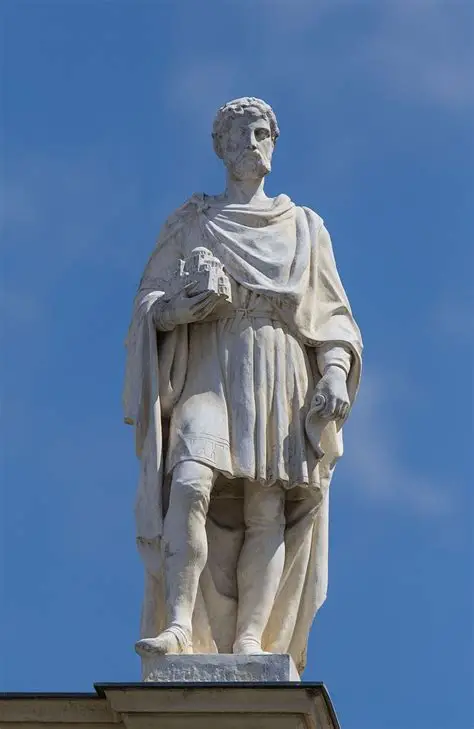
Anthemius of Tralles (c. 474 – mid-6th century CE) was a Byzantine mathematician and architect best known as one of the co-designers of Hagia Sophia in Constantinople. He combined advanced geometric knowledge with practical engineering, applying theoretical principles to the design and construction of monumental structures.
Anthemius studied conic sections and optical phenomena, particularly the reflective properties of parabolic and elliptical surfaces. In his treatise On Burning Mirrors, he analyzed how curved mirrors could focus light and heat, demonstrating an understanding of ray optics that connected mathematics to physics. These studies illustrate the integration of pure and applied mathematics in Byzantine engineering.
In architecture, Anthemius applied geometric reasoning to design pendentives, domes, and arches that could sustain massive weights and maintain structural stability. His use of geometry in spatial problem-solving foreshadowed modern structural analysis. For example, he considered the curvature of domes and calculated how forces were transmitted along arches and vaults, anticipating later developments in statics.
Anthemius’ work exemplifies the practical application of mathematics in real-world engineering. He ensured that theoretical constructs, such as conic sections, became tools for solving structural and optical problems. His blend of theory, observation, and experimentation influenced Byzantine architectural practice and preserved a lineage of applied geometry for future generations.
Through his contributions, Anthemius represents a rare combination of mathematician, scientist, and architect, demonstrating how geometry could inform and guide the creation of enduring monuments.

All rights reserved by the Mathematical Unity
Contact: +8801400044645
Email: mathematicalhorse1453@gmail.com
Our Discord Server: Mathematical Unity [Ulus Riyadiyat]