Welcome to the Mathematical World!
Diophantus of Alexandria
Father of Algebra and the Origin of Diophantine Equations
Diophantus of Alexandria was a Greek mathematician commonly referred to as the "Father of Algebra" due to his earliest known work on solving equations and studying numerical relationships; although in most cases Muhammad ibn Musa al-Khwarizmi is considered as the "Father of Algebra". Born in Alexandria, Egypt, under the Roman Empire, there is little information on his personal life, but his contribution to mathematics is enormous.
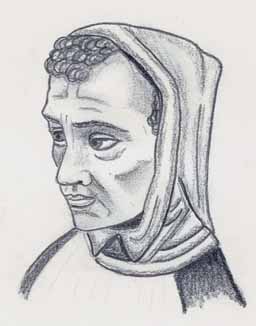
His most renowned work, Arithmetica, is a thirteen-book collection (only six of which have survived, though four more were later discovered in Arabic translation) that presented ways of solving algebraic equations, especially those involving more than one unknown. These equations typically took the form of what we now call Diophantine equations, which are polynomial equations where integer solutions are sought.
Diophantus was one of the first to note that some equations could have multiple or no solutions, a
concept
fundamental to modern algebra. For example, in modern terms, he addressed problems like finding integers
x, y
such that
\ — an early encounter with what are now called Pythagorean triples.
He also developed a symbolic notation for unknowns and powers of a variable, which, while not as sophisticated as modern notation, was an important move towards abstraction in mathematics. His symbols included representations for the unknown (similar to our "x") and its powers, as well as operations and constants, marking a transition from rhetorical algebra (in full sentences) to symbolic algebra.
Arithmetica comprises hundreds of problems, many of which involve solutions to indeterminate equations now known as Diophantine equations, where only integer solutions are acceptable. These include equations such as:
- \
- \, where a, b, c are known integers and x, y are to be found in integers.
These types of equations remain central to number theory today.
His work established the foundation of number theory and influenced subsequent mathematicians such as Pierre de Fermat, whose legendary "Last Theorem" was a marginal note in his copy of Arithmetica. Fermat's note famously stated: “I have discovered a truly marvelous proof of this, which this margin is too narrow to contain,” referencing the equation:
\
which has no integer solutions — a conjecture unsolved until 1994 by Andrew Wiles.
Diophantus' work symbolizes a shift from Greek geometry-based mathematics to one that was more algebra and arithmetic-based, impacting both medieval Islamic mathematicians such as Al-Khwarizmi and Renaissance thinkers like Viète and Fermat. Islamic scholars preserved and extended his work, notably in Arabic translations which allowed for broader dissemination across cultures.

All rights reserved by the Mathematical Unity
Contact: +8801400044645
Email: mathematicalhorse1453@gmail.com
Our Discord Server: Mathematical Unity [Ulus Riyadiyat]