Welcome to the Mathematical World!
Hypatia of Alexandria
Mathematical Commentator and Teacher
Hypatia of Alexandria (c. 355–415 CE) was a renowned mathematician, philosopher, and teacher in late antique Alexandria. Daughter of Theon of Alexandria, she inherited a deep knowledge of Greek mathematics and astronomy and became a leading intellectual figure of her city. Hypatia is known for her commentaries on Diophantus, Apollonius’s Conics, and possibly Ptolemy’s Almagest, though her original works have not survived and are known primarily through references by her students and contemporaries.
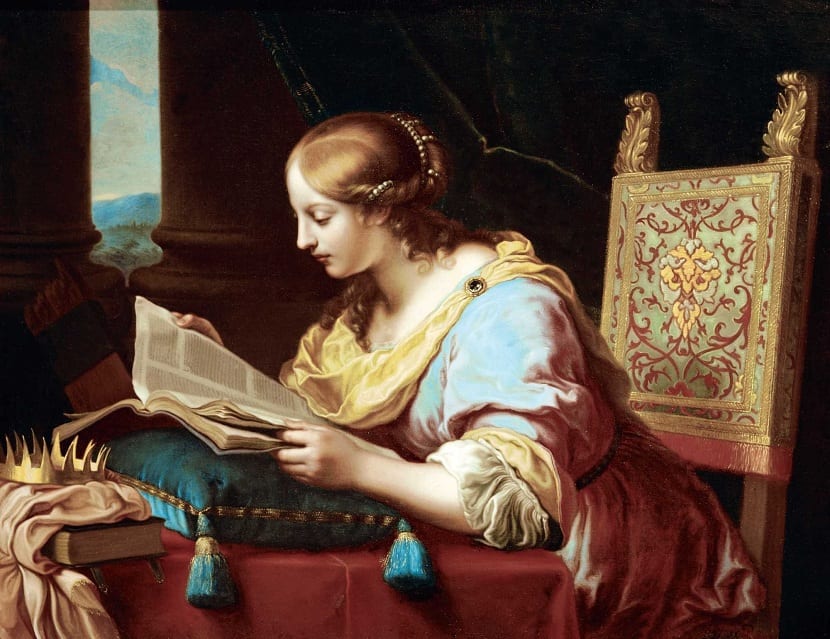
Her mathematical activity focused on clarifying and teaching complex geometric and algebraic concepts. For example, in the study of conic sections, she explained properties of ellipses, parabolas, and hyperbolas, likely illustrating them using geometric diagrams and proportional reasoning, similar to the Greek synthetic style. She also engaged with numerical calculations, such as interpolation methods and astronomical tables, enabling her students to apply mathematical theory to practical problems like eclipse prediction and planetary position.
Hypatia’s pedagogical approach combined theory with instruments; she was reputed to be proficient with the astrolabe and hydroscope, teaching students how to link abstract formulas to observable phenomena. Her lectures reportedly attracted scholars from across the Mediterranean, indicating the widespread recognition of her expertise.
Beyond her technical achievements, Hypatia’s life embodies the cultural role of mathematics in Late Antiquity: a discipline intertwined with philosophy, observation, and public teaching. She emphasized clarity of exposition, rigorous reasoning, and hands-on understanding, laying the groundwork for how Greek mathematics would be transmitted to Byzantine and, later, Islamic scholars.
Her untimely death in 415 CE, caused by political and religious turmoil, marked a symbolic end to the Alexandrian mathematical tradition. Nevertheless, through her students and the intellectual networks she fostered, Hypatia ensured that Greek mathematical knowledge remained influential, emphasizing pedagogy, applied reasoning, and mathematical rigor.

All rights reserved by the Mathematical Unity
Contact: +8801400044645
Email: mathematicalhorse1453@gmail.com
Our Discord Server: Mathematical Unity [Ulus Riyadiyat]