Welcome to the Mathematical World!
International Mathematical Olympiad (IMO)
The Premier Global Contest for Pre-University Problem Solvers
The International Mathematical Olympiad (IMO) is the oldest and most prestigious annual mathematics competition for high-school students worldwide. Established in 1959, the IMO brings together the brightest young problem solvers from more than a hundred countries for a celebration of mathematical creativity, rigorous thinking, and international fellowship.
- Founded: July 1959
- Scope: Pre-university (typically up to age 20) international contest
- Typical Dates: July (annual)
- Format: Two 4.5-hour exam days, 3 problems each day
- Participants: Up to 6 students per national team
At its core the IMO is a contest of proof — participants tackle challenging olympiad problems in geometry, algebra, number theory, and combinatorics. Unlike routine exercises, IMO problems reward deep insight, elegant reasoning, and clear presentation of arguments. National delegations select and train teams through local and national olympiad systems, culminating in intensive training camps before the international event.
Origins & Purpose
The IMO began as a regional initiative and quickly grew into a global institution whose purpose is twofold: to stimulate mathematical talent among young people, and to foster international cooperation and friendly competition. Over time the IMO has become an incubator of future mathematicians, scientists, educators, and technologists.
Structure & Examination Format
The IMO exam consists of two days of testing. Each day contestants receive a paper with three problems and have 4.5 hours to present full solutions. Problems are graded on a detailed rubric; partial credit is awarded for correct, well-explained steps. The total maximum score per contestant is 42 points (each problem worth 7 points).
Teams are accompanied by leaders and mentors who coordinate selection and translations, and who later form the international jury that selects problems and finalizes scores. The host country organizes cultural events alongside the contest to promote cross-cultural exchange.
Scoring, Medals & Awards
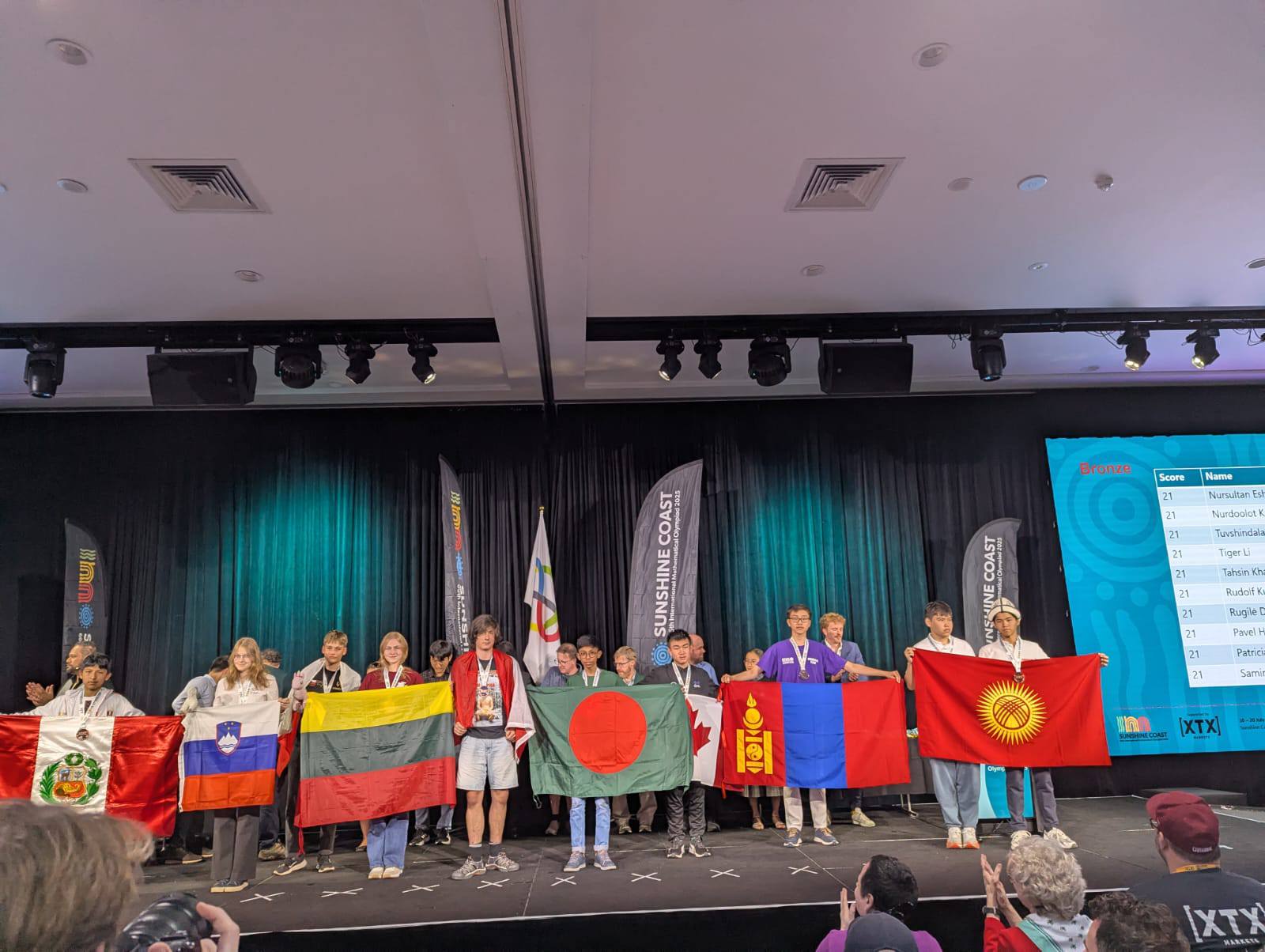
Medals (gold, silver, bronze) and honorable mentions are awarded according to fixed proportions; typically about half of contestants receive a medal. In addition to individual recognitions, some IMOs present special prizes for particularly elegant solutions, and teams gain honor by strong collective performance.
Notable Participants & Records
Many IMO alumni have become prominent researchers, professors, and leaders in STEM fields. Records and milestones — such as perfect scores, highest cumulative country rankings, and youngest medallists — are celebrated within the global olympiad community and often inspire future students.
Hosting & Global Rotation
The IMO is hosted by a different country each year. Host nations handle problem selection, logistics, venues, and cultural programs. Hosting duties rotate across continents and provide opportunities for local mathematical communities to showcase their traditions while welcoming international visitors.
Problem Style & Training
IMO-style problems emphasize rigorous proofs: contestants must justify every claim and structure solutions with clarity. Training for the IMO commonly involves problem classes, mock contests, and guided mentorship — activities that strengthen logical thinking and expose students to creative mathematical strategies.
Relation to National Olympiads (e.g., BdMO)
National olympiad systems serve as feeders to the IMO: local contests, regional rounds, and national training camps identify talented students and prepare them for international competition. Programs like BdMO cultivate regional talent and help national selectors prepare strong, well-trained teams.
Challenges & Future Prospects
Contemporary challenges include ensuring equitable access to training, bridging disparities between countries with differing resources, and maintaining rigorous, fair selection processes. Future prospects center on broader outreach, digital training platforms, and collaborations that expand opportunities for underrepresented regions.
The IMO has, for decades, celebrated young mathematical talent while forging connections across nations. Beyond medals and rankings, its lasting legacy is a worldwide community of problem solvers and mentors who advance mathematical thinking and inspire generations of students to explore the beauty of proof.
Useful Links
All rights reserved by the Mathematical Unity
Contact: +8801400044645
Email: mathematicalhorse1453@gmail.com
Our Discord Server: Mathematical Unity [Ulus Riyadiyat]