
Welcome to the Mathematical World!
Isidore of Miletus
Mathematician, Engineer, and Architectural Innovator
Isidore of Miletus (born c. 475 CE) was a Byzantine mathematician and architect, co-leader with Anthemius of Tralles on the construction of Hagia Sophia. He applied mathematical theory to practical architectural challenges, such as designing large domes and complex structural forms. His understanding of geometry, mechanics, and material behavior allowed the creation of one of the most ambitious buildings of late antiquity.
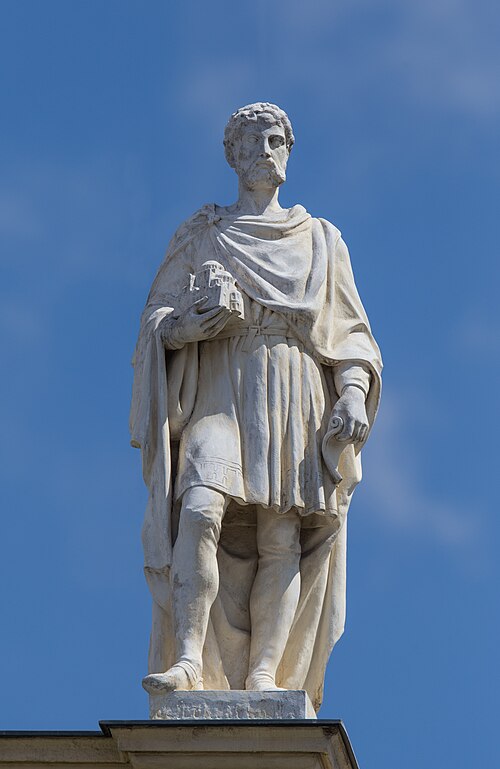
Isidore was reportedly familiar with Archimedes’ work on centers of gravity and mechanics, which he may have used to calculate loads and stresses in domes and vaults. By combining geometric principles with empirical observation, he ensured that the enormous central dome of Hagia Sophia could be constructed on pendentives without catastrophic failure. His work exemplifies the use of geometry as a tool to translate abstract mathematical knowledge into tangible, physical outcomes.
Isidore also contributed to mathematical education in Byzantium, reportedly teaching engineers and architects methods for calculating angles, distances, and proportions. His career demonstrates the symbiosis of scholarship and craftsmanship in late antiquity.
Through his combination of theory and practice, Isidore exemplifies the enduring relevance of mathematics beyond the classroom, showing how abstract reasoning informs large-scale engineering and architecture.

All rights reserved by the Mathematical Unity
Contact: +8801400044645
Email: mathematicalhorse1453@gmail.com
Our Discord Server: Mathematical Unity [Ulus Riyadiyat]