Welcome to the Mathematical World!
Mikhail Lomonosov
Founder of Russian Science
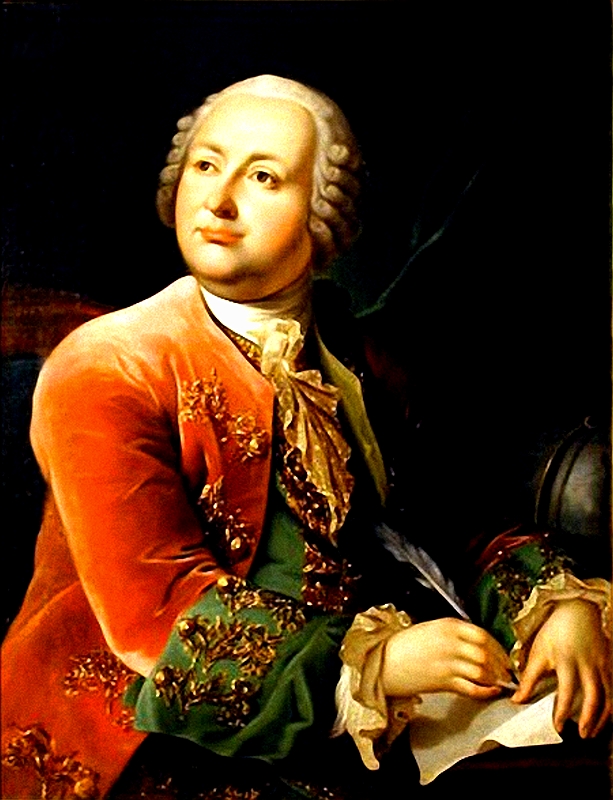
Mikhail Vasilyevich Lomonosov (1711–1765) is often celebrated as the founder of modern Russian science. A polymath, he contributed to chemistry, physics, astronomy, linguistics, and poetry. Lomonosov’s central vision was that science and education should elevate Russian society, connecting European advances with national progress. He established the foundation for systematic research in Russia and helped found Moscow University, which later bore his name.
Scientific Contributions
- Chemistry — Lomonosov anticipated the law of conservation of mass, arguing that matter cannot disappear but only change form. He also developed early theories of atomic-molecular structure.
- Physics — He worked on the kinetic theory of gases, proposing that heat arises from the motion of particles, a precursor to later thermodynamic principles.
- Astronomy — In 1761, he correctly inferred the existence of an atmosphere around Venus during a solar transit, a remarkable discovery for his time.
Mathematical Vision
Although not a specialist mathematician, Lomonosov strongly promoted mathematical reasoning in the natural sciences. He emphasized quantitative experiments and proportionality, applying geometric methods to optics and mechanics. His outlook reflects the principle that science should be built upon clear measurement, formulas, and numerical consistency. For example, he emphasized that chemical reactions must satisfy the balance of weights:
\[ \sum m_{\text{reactants}} = \sum m_{\text{products}} \]
Legacy
Lomonosov left behind a vision of Russia as a modern scientific nation. He combined experimental science with cultural development, proving that rigorous research could coexist with poetry and philosophy. Today, he is remembered not just as a scientist, but as a universal thinker who bridged disciplines. Moscow State University, the most prestigious in Russia, continues to honor his name as a symbol of intellectual ambition.
Facts
- Born in Kholmogory, Russia.
- Founded Moscow University in 1755.
- Discovered the atmosphere of Venus.
- Anticipated the law of conservation of mass.
- A poet, historian, and scientist in equal measure.

All rights reserved by the Mathematical Unity
Contact: +8801400044645
Email: mathematicalhorse1453@gmail.com
Our Discord Server: Mathematical Unity [Ulus Riyadiyat]