Welcome to the Mathematical World!
Nasir-ud-Din al-Tusi
Scholar of Astronomy, Mathematics, and Philosophy
Not to be confused with Sharaf ad-Din al-Tusi!!! (Clickable Link)
Nasir-ud-Din al-Tusi (1201 – 1274 CE), full name Muhammad ibn Muhammad ibn al-Hasan al-Tusi, was a Persian polymath who made significant contributions to astronomy, mathematics, philosophy, and theology during the Islamic Golden Age. Born in Tus, in the region of Khorasan (present-day Iran), al-Tusi became one of the most influential scholars of the 13th century. He produced over 150 works across various disciplines, many of which were later translated into Latin and influenced European Renaissance thinkers.
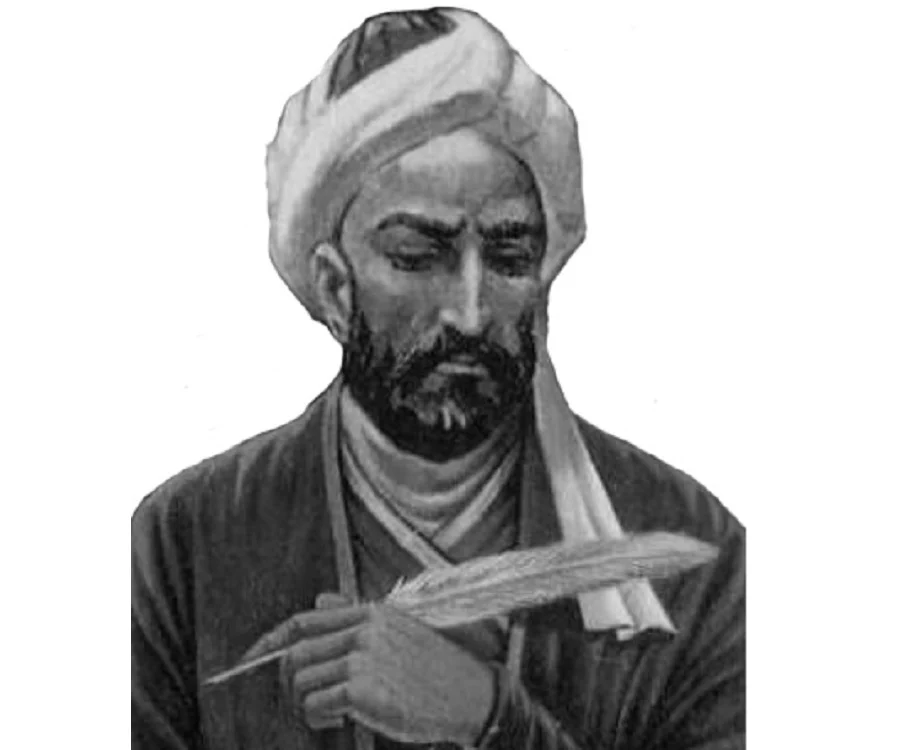
Al-Tusi made remarkable contributions to trigonometry, establishing it as an independent branch of mathematics. He was one of the first to treat trigonometry as a mathematical science rather than a tool of astronomy. His work “Treatise on the Complete Quadrilateral” systematically defined the six fundamental trigonometric functions and presented the law of sines for both plane and spherical triangles:
- \(\frac{a}{\sin (A)}=\frac{b}{\sin (B)}=\frac{c}{\sin (C)}\)
He also derived the spherical law of sines and established relationships between sides and angles in spherical triangles, which became foundational for later Islamic and European astronomy. His text “Al-Tadhkira fi Ilm al-Hay’a” (Memoir on Astronomy) corrected and improved many aspects of the Ptolemaic model, introducing the famous “Tusi Couple” — a geometric model involving two circular motions that produced linear motion, used to explain planetary behavior without violating uniform circular motion.
Al-Tusi headed the Maragha Observatory, one of the most advanced scientific institutions of its time, where he led a team of scholars and produced highly accurate astronomical tables known as the “Zij-i Ilkhani.” His mathematical innovations, especially in trigonometry and geometry, helped lay the groundwork for later developments in mathematical astronomy.
- Established trigonometry as an independent mathematical discipline
- Introduced the law of sines and advanced spherical trigonometry
- Proposed the Tusi Couple to resolve issues in planetary motion models
- Directed the Maragha Observatory, producing precise astronomical data
Nasir-ud-Din al-Tusi’s influence extended beyond mathematics and science. He also wrote extensively on ethics, logic, and metaphysics, blending Islamic thought with Greek philosophy. His legacy lives on in both Islamic and Western scientific traditions, and he is remembered as one of the most brilliant minds of medieval science.

All rights reserved by the Mathematical Unity
Contact: +8801400044645
Email: mathematicalhorse1453@gmail.com
Our Discord Server: Mathematical Unity [Ulus Riyadiyat]