
Welcome to the Mathematical World!
Śrīpati
Śrīpati (c. 1019 – c. 1066 CE)
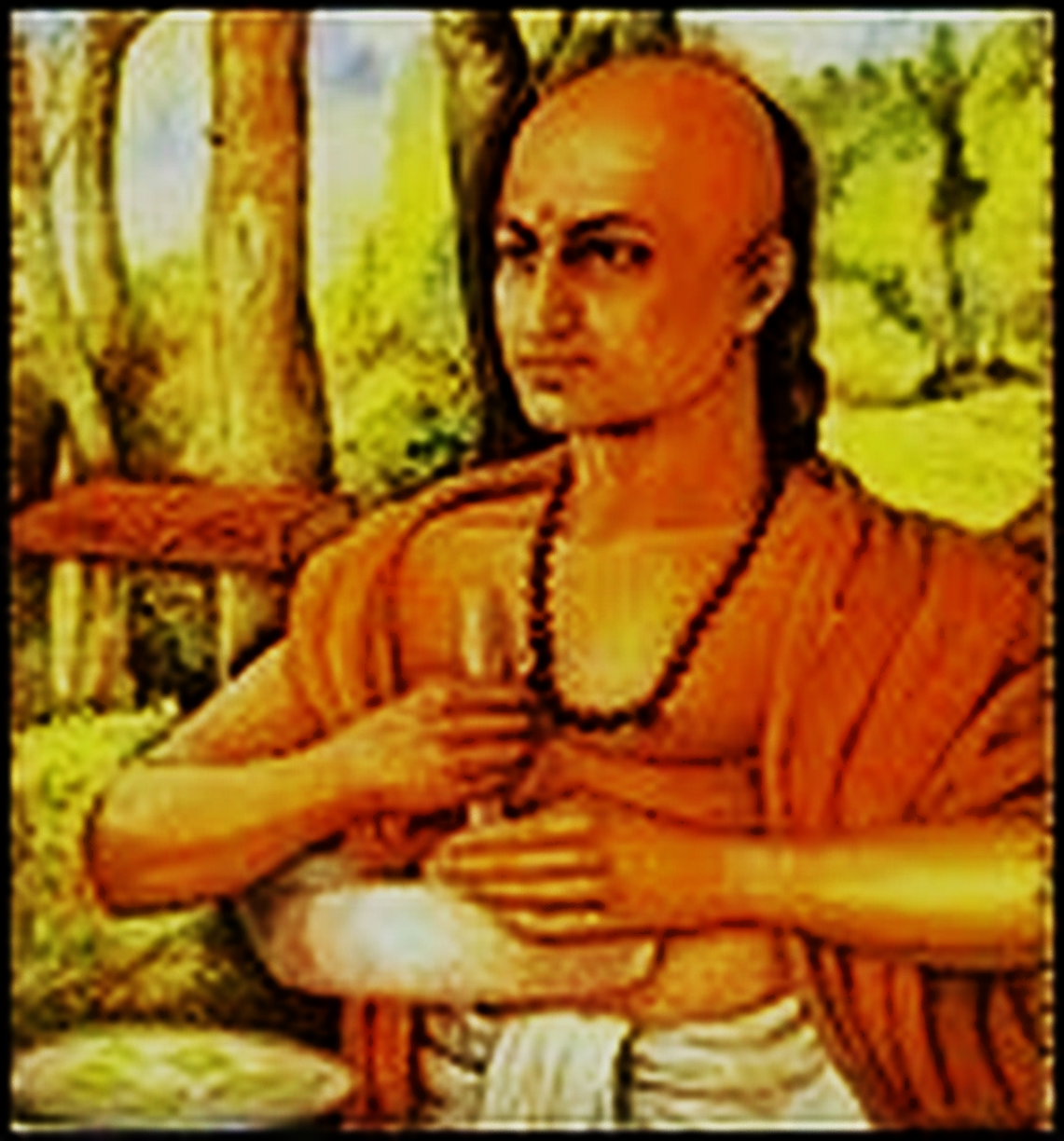
Śrīpati was a medieval Indian mathematician and astronomer, born in the early 11th century, likely in the southern region of Maharashtra or Karnataka. Though not much is known about his life, his works suggest he came from a lineage of Shaivite scholars and was well-versed in earlier Indian mathematical and astronomical traditions.
Contributions and Achievements
Śrīpati’s key work in mathematics is the Siddhanta-Śekhara, a treatise in 19 chapters, covering arithmetic, algebra, geometry, and combinatorics, along with astronomical calculations. His writing style was lucid and often poetic, making complex concepts easier to grasp for students of his time.
He gave systematic rules for:
- Solving quadratic equations
- Calculating areas and volumes
- Mathematical operations with surds and fractions
- Computing planetary positions
He also authored the Ganitatilaka, a concise manual on arithmetic, and Dhik-Karana, a text on astronomical computation. Śrīpati is notable for detailing error corrections and showing intermediate steps in his solutions—rare features in Sanskrit mathematical literature. He also laid out the use of zero and the decimal system with clarity.
Śrīpati’s works bridged earlier classical Indian scholars with the emerging schools of thought in the later medieval period. His influence extended into Islamic mathematical translations and later into Kerala's mathematical tradition.

All rights reserved by the Mathematical Unity
Contact: +8801400044645
Email: mathematicalhorse1453@gmail.com
Our Discord Server: Mathematical Unity [Ulus Riyadiyat]